Trump’s Davos 2026 Speech Spotlights Greenland, NATO, Military Build-Up, and a Housing Agenda
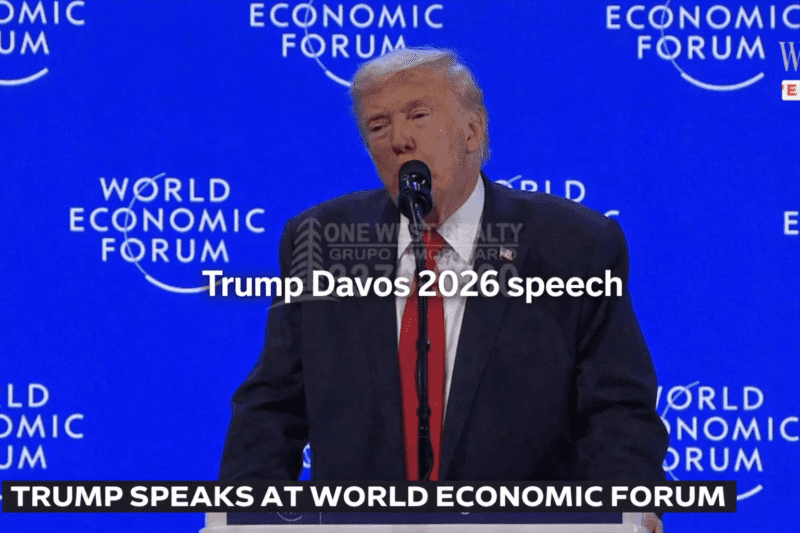
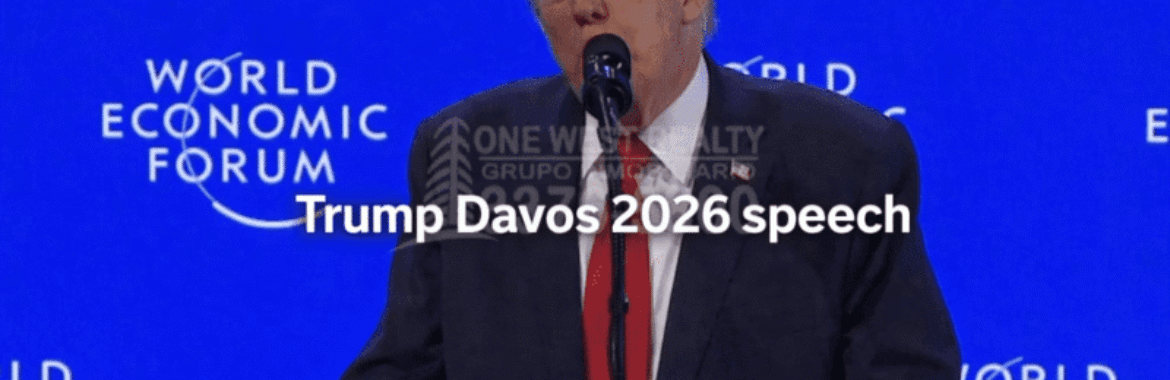
At the World Economic Forum in Davos, Donald Trump delivered a long, story-driven address. Throughout the speech, he mixed national security demands with economic promises. In particular, he highlighted Greenland, NATO, defense production, and housing policy.
DAVOS, Switzerland — During the World Economic Forum’s Annual Meeting in 2026 in Davos, former President Donald Trump used the global stage to argue that U.S. strength is the foundation of Western stability. At times, he praised allies and spoke about shared “civilizational” ties. However, he also scolded Europe for what he called self-inflicted decline. Meanwhile, he returned again and again to a theme that linked everything together. In his view, economic power and military power rise and fall as one.
Notably, Trump’s remarks moved between broad policy claims and vivid anecdotes. For example, he complained about wind turbines, calling them ugly and harmful. He said they “kill the birds” and “ruin your landscapes.” Then, without pausing, he pivoted back to national security. That same pattern continued through Greenland, NATO, Ukraine, and the U.S. economy.
Greenland: “No force,” but renewed push for negotiations with Denmark
Trump said the United States is seeking immediate negotiations with Denmark to discuss acquiring Greenland. He repeatedly described it as a “big, beautiful piece of ice,” and he said the island sits in a strategic lane between the United States, Russia, and China. Moreover, he argued that no country or group of countries can secure Greenland the way the U.S. can.
Trump framed his case with history. He referenced World War II, describing Denmark’s rapid defeat and the U.S. role that followed. According to Trump, America established bases, bore major costs, and prevented enemies from gaining a foothold. Later, he said, the United States returned Greenland to Denmark. In his telling, that decision now looks like a mistake because modern threats have changed. Consequently, he said the issue is no longer about symbolism or minerals. Instead, he described Greenland as a “core national security interest.”
Even so, Trump offered a clear reassurance. He said he would not use military force to obtain Greenland. In fact, he acknowledged that some observers expected him to use force. However, he insisted he does not want to do that. Instead, he said he wants an agreement and believes the U.S. does not need force to achieve it.
NATO and allied burden-sharing
After Greenland, Trump widened the lens to NATO and the broader U.S.-Europe relationship. On one hand, he said the United States “cares greatly” about Europe and wants strong allies. He argued that energy, trade, immigration, and growth must be central priorities for any united West. Yet, he also criticized European leadership and said many countries have weakened themselves.
At the same time, Trump returned to a familiar grievance. He said the U.S. contributes heavily to NATO and gets too little in return. He questioned whether allies would respond if the United States were attacked. Moreover, he described the alliance as one-sided for decades. He also claimed he pushed members beyond the traditional 2% defense target. Regardless of the specific numbers, his central message remained consistent. In his view, the U.S. has carried the burden, and Europe has grown accustomed to it.
Military build-up: faster weapons production and expanded capacity
Trump then shifted to a forceful pitch about military expansion. He argued that deterrence requires both advanced weapons and rapid production. For that reason, he said defense contractors must deliver faster. He criticized long timelines for major systems, and he described a push to accelerate output. In addition, he said companies should build new plants and expand capacity.
Trump referenced major weapons programs and framed them as evidence of U.S. superiority. He mentioned advanced aircraft platforms and said the U.S. is building increasingly capable jets. He also referenced missile and defense systems, while emphasizing scale and speed. Moreover, he said defense firms should redirect money toward manufacturing rather than stock buybacks. As he described it, that shift would allow the U.S. to produce Tomahawk-style missiles, Patriots, and other systems more quickly.
Trump also claimed American military strength can neutralize hostile systems. He described adversaries’ equipment as disorganized and ineffective during a recent confrontation. In his account, defensive systems “couldn’t fire” and failed at critical moments. He used that story to argue that rivals will “go back to the drawing boards.” Meanwhile, he framed U.S. strength as a warning. He said America could be “unstoppable” if it chose to use “excessive strength.” However, he again insisted he would rather avoid that approach.
Finally, Trump tied the build-up back to Greenland. He said ownership matters because you “can’t defend it on a lease.” He also said the Arctic could become a central route in future conflict. Therefore, he argued Greenland is not a side issue. Instead, he described it as a strategic platform for U.S. and allied security.
Economy and investment: inflation claims and factory expansion
From defense, Trump pivoted to the economy. He claimed inflation has been defeated and said key costs are coming down. Specifically, he mentioned groceries, energy, airfares, rent, and car payments. Moreover, he said the U.S. inherited “a mess” and fixed it quickly. He also argued that growth should not automatically be treated as a threat. In his view, strong growth can fight inflation rather than fuel it.
Trump highlighted what he described as extraordinary investment levels. He said massive sums are being committed to factories and new business formation. He also claimed companies are moving operations into the United States to avoid future tariffs. According to Trump, car plants and industrial facilities are being built at record pace. In addition, he described these projects as larger and more modern than past eras. As a result, he said the U.S. is experiencing a manufacturing surge that supports long-term economic strength.
He also linked the economy to national security. He argued that a strong economy is essential to sustain military readiness. Meanwhile, he criticized the Federal Reserve and monetary policy decisions. He said rates should be lower, and he suggested the U.S. should pay among the lowest rates in the world. Although he criticized current leadership, he also hinted at future changes at the Fed.
Mortgage rates, housing supply, and lending access
Trump spent notable time on housing and mortgages, and his tone shifted to detailed explanation. He called homeownership a symbol of national health and the “American dream.” At the same time, he acknowledged the tension at the center of housing policy. On one side, he said Americans need affordability and access. On the other, he said policy cannot destroy existing homeowners’ equity.
Trump highlighted a claim that the average 30-year mortgage rate has moved closer to the 6% range. Then, he explained why he says he is “very protective” of people who already own homes. He argued that if the market is pushed too hard, prices could fall quickly. Consequently, he warned that families who built wealth through rising home values could be harmed. In addition, he suggested sharp disruptions could lead to defaults and financial stress.
Still, Trump said he wants lending to become more accessible. He described a plan for government-backed institutions to purchase mortgage bonds. In his framing, that would inject liquidity into banks and encourage more lending. Moreover, he argued that easier credit and lower rates would help buyers re-enter the market. At the same time, he said changes must be measured. Therefore, he portrayed his approach as balancing affordability with stability.
Trump also criticized institutional investors for buying large volumes of single-family homes. He said homes are “built for people, not for corporations.” Additionally, he claimed investor purchases have driven up prices and pushed families out. He said he signed an executive order to restrict large institutional investors from buying single-family homes. Furthermore, he urged Congress to turn that into permanent law.
For additional context on affordability trends, see: Midwest housing affordability
Credit cards, prescription drugs, crypto, and AI
Trump then broadened the domestic agenda to household finances. He criticized credit-card interest rates as excessive and said consumers are being squeezed. Therefore, he promoted a plan to cap credit-card interest at 10% for one year. He argued this would give families room to recover and save. In addition, he said it would reduce the risk of debt spirals that threaten housing stability.
Trump also claimed prescription drug prices could drop significantly under a “most favored nation” approach. He described using tariffs as leverage to pressure other countries on pricing. Meanwhile, he said the United States should remain the “crypto capital of the world.” He noted that Congress is working on market-structure legislation for crypto. Finally, he argued America is the biggest player in AI and must stay ahead of China.
Politics and the 2020 election: prosecution vow
Trump ended key sections of his remarks by returning to politics and grievance. He again claimed the 2020 election was rigged. As a result, he said prosecutions would follow for those involved. He also criticized the media, describing it as biased and unfair.
Finally, he tied his political argument back to policy. He blamed the prior administration for inflation, border instability, and international conflict. Meanwhile, he portrayed his agenda as a reset built on borders, security, and growth. In that sense, his Davos message was not narrowly about one topic. Instead, he framed Greenland, NATO, the military build-up, and housing as pieces of one strategy.