
San Pedro Sula Real Estate Investment: Growth Sectors & Interactive Map
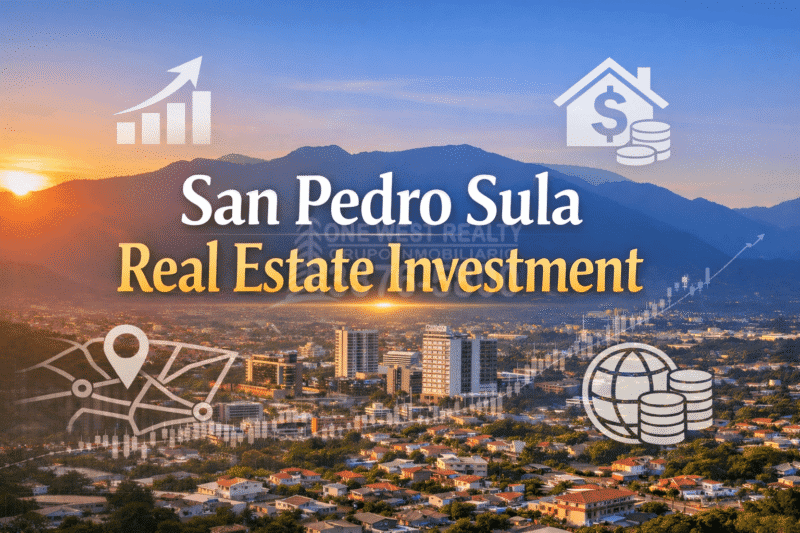
An investor-focused overview of San Pedro Sula, Honduras—growth corridors, sector dynamics, and the residential communities buyers and renters ask for most.
Investor lens: San Pedro Sula is Honduras’ commercial and industrial powerhouse. Therefore, real estate demand often follows three forces: logistics connectivity, employment nodes, and livability upgrades.
In practice, when roads improve, jobs expand, and modern inventory increases, absorption typically rises. Use this guide to match your strategy: Rentals Land banking Buy & hold Build-to-sell.
Why San Pedro Sula is trending with investors
San Pedro Sula (SPS) is Honduras’ most active economic hub, and that role creates persistent real estate demand. First, SPS benefits from its position inside the country’s logistics and manufacturing ecosystem. Second, expanding employment nodes support steady household formation and rental absorption. Finally, livability upgrades—new communities, services, and vertical projects—help modern inventory stay in motion.
Consequently, many investors focus on areas where jobs, access, and lifestyle improvements converge.
San Pedro Sula by sectors: what investors should know
Underwriting note: Appreciation and rent growth are localized. Therefore, verify assumptions with comps, current listings, HOA rules (when applicable), and realistic vacancy/maintenance inputs before deploying capital.
Northwest (NW): the primary growth corridor
The Northwest is widely recognized as SPS’s most visible expansion front. Because new housing, retail, and road connectivity keep converging here, demand remains broad-based across buyers and renters. In particular, Bulevar Mackey has become a reference point for corridor-driven absorption.
Frequently requested communities include: Foresta, Merendón Hills, El Barrial, Jaraguá, Casa Maya, Ciudad Maya, Nova, Santa Mónica, La Tara, and Jardines del Valle.
Southwest (SW): established neighborhoods + central convenience
The Southwest is typically preferred by long-time residents who value proximity to established services. Moreover, cross-city access is often easier from this zone, which supports stable tenant demand. For investors, that can translate into consistent performance, especially when renovations are executed thoughtfully.
Common reference neighborhoods: Col. Trejo, Col. Figueroa, Col. Dubón, Col. Juan Lindo, and surrounding areas.
Northeast (NE): value positioning with longer-term upside
The Northeast can offer more competitive entry points today; however, upside may improve as services and infrastructure expand. As a result, investors focused on land banking or early-cycle acquisitions keep this zone on their radar—particularly where access improves.
Frequently requested communities: Campisa, Rancho Tara, and Las Españolas.
Southeast (SE): industrial and commercial gravity
The Southeast is influenced by industrial and commercial activity, plus routes toward nearby municipalities such as La Lima. Therefore, opportunity often appears in workforce housing, service-driven rentals, and strategically located parcels that benefit from commuter flows.
3 investor case studies (how strategies can perform)
Case 1: Jardines del Valle (NW) — demand + connectivity
This node is often underwritten for family rentals and resale liquidity. Additionally, access to services and NW positioning can support stable absorption when the asset quality matches the local tenant profile.
Case 2: Bulevar Mackey (NW) — corridor-driven absorption
When retail growth and mobility improvements concentrate along a corridor, absorption can accelerate. Consequently, investors look for gated communities, townhomes, and well-positioned frontage-compatible assets.
Case 3: Southeast (SE) — industrial adjacency
Industrial and commercial gravity can support steady demand for nearby housing and services. For that reason, yield-focused investors pair this strategy with disciplined tenant screening and conservative maintenance reserves.
FAQ for investors
Which sector is best for investment in San Pedro Sula?
For growth-oriented strategies, the Northwest is usually the first stop due to visible development and corridor effects. Meanwhile, the Southwest can fit stability and renovation plays. If you prefer earlier-cycle positioning, consider the Northeast.
What property types are most common for investors?
Typically, investors focus on family rentals, executive rentals, development land, and small commercial assets in high-traffic nodes. In addition, condos can work well for certain tenant profiles and budgets.
How do I validate appreciation and rent assumptions?
Start with comparable sales and active listings; then layer in rent comps, HOA rules, and build specs. Finally, stress-test vacancy and maintenance. If you want, we can share a tailored comp set for your target submarket.
Can One West Realty support end-to-end acquisition?
Yes—market selection, property sourcing, due diligence coordination, and negotiation support. Additionally, we help align product type with the right tenant or buyer profile so your strategy stays coherent.
Want an investor-ready shortlist?
Share your target—cashflow, growth, or land banking. Then we’ll recommend the SPS sectors and inventory that best match your plan.
Disclaimer: This is general market commentary, not financial advice. Final underwriting should be based on verified comps, legal due diligence, and your risk profile.