

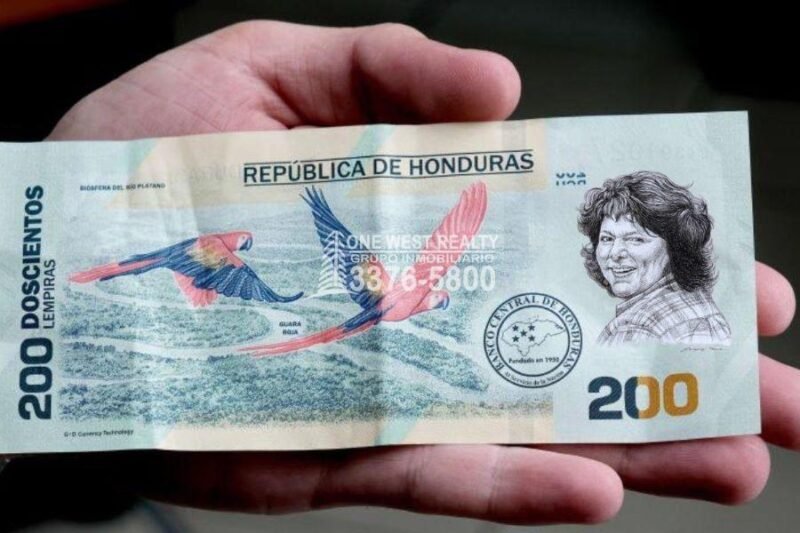
The news about the printing of banknotes in Malta by Honduras has sparked a debate in the Central American country. According to the statement from the CENTRAL BANK OF HONDURAS, the company "Crane Currency Malta Limited" will be responsible for printing 20 million bills of 200 lempiras. These bills will feature the image of the renowned environmentalist Bertha Cáceres.
Controversy over costs and outsourcing
Controversy arises from the fact that Honduras will pay 32 million for printing currency valued at 200 million. It is argued that third countries often handle the printing of money. However, the cost appears excessive for the Honduran economy.
Parallel with Honduras' monetary history
This event reminds us of the early days of the Central Bank of Honduras when it encountered similar challenges in producing banknotes. During that time, because of time constraints, authorized banks issued banknotes, offering their printing plates for free. Consequently, the circulation of 5 lempiras bills could begin from the bank's first day of operations.
The importance of design in the history of Honduran banknotes
The designs of banknotes have also been of interest throughout the country's history. In its early issuances, a contest among Honduran artists was held to select the motifs for different denominations. From portraits of national heroes to scenes of everyday life, each bill has told a visual story of Honduras.
Commitment to security and evolution
The commitment of the Central Bank of Honduras to continuous improvement has been evident in the evolution of banknote designs. This reflects their dedication to enhancing security and aesthetics. This commitment underscores their dedication to enhancing security and aesthetics. New security measures have been incorporated to combat counterfeiting. In addition to highlighting cultural and commemorative aspects.
Guarantee of circulation and financial stability
Despite criticisms, authorities assure that banknotes issued by the Central Bank of Honduras, from its founding in 1950 to date, are legal tender. Furthermore, they will be accepted at face value. There is no time limit for their exchange, ensuring financial stability in the country.
The printing of banknotes in Malta sparked discussions in Honduras, leading to a recall of past challenges and achievements in the country's monetary history. Simultaneously, it highlights the Central Bank's commitment to security and the continuous evolution of its banknotes.